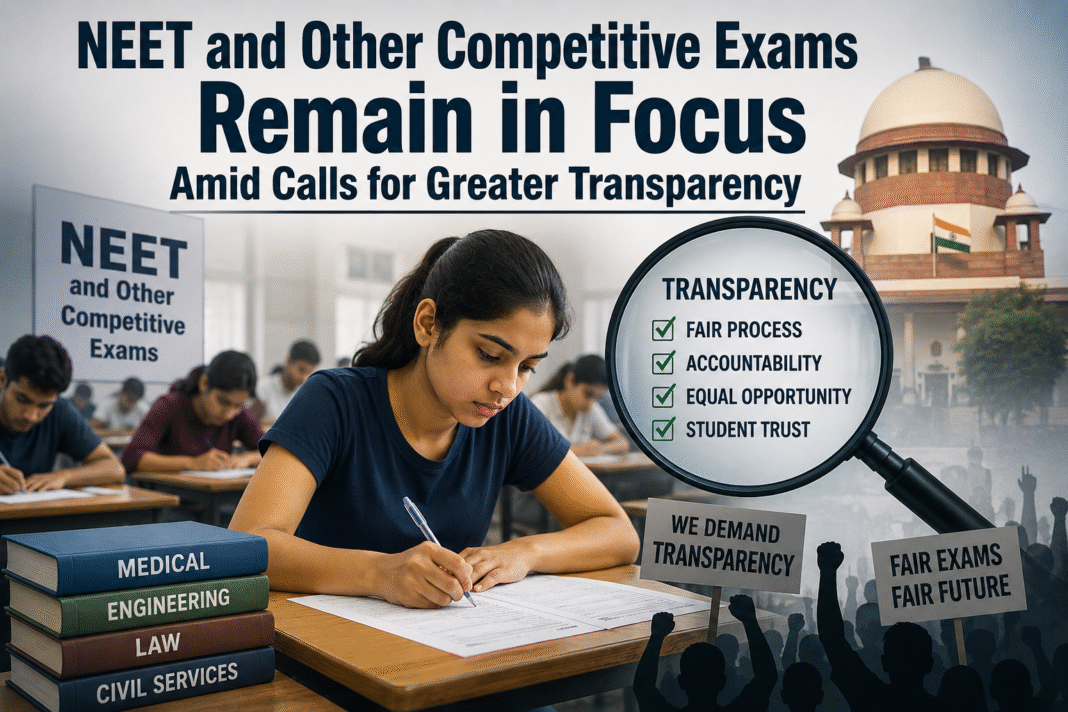
Introduction: Why Transparency Has Become a National Discussion
For millions of students across India, competitive exams are more than just tests—they are gateways to their dreams. Whether it is securing a seat in a top medical college through NEET 2026, getting into a prestigious engineering institute, or earning a government job, these examinations shape the future of countless young aspirants.
Over the past few years, however, the focus has shifted beyond preparation and results. Students, parents, and educators are increasingly asking for Greater Transparency in Exams. They want an examination system that is fair, secure, and accountable at every stage. This growing demand has brought NEET and Other Competitive Exams into the national spotlight, highlighting the importance of trust in India’s education system.
Why Greater Transparency in Exams Matters More Than Ever
Every student who appears for a competitive exam invests months—or even years—of hard work, dedication, and sacrifice. When concerns arise about examination processes, it naturally creates anxiety among candidates.
Building Trust Among Students
A transparent examination system gives students confidence that their performance alone will determine their success. It reassures them that every candidate is competing on a level playing field and that merit remains the deciding factor.
Protecting the Value of Hard Work
Preparing for exams like NEET or JEE requires discipline, patience, and perseverance. Students expect that their efforts will be rewarded fairly. Transparent procedures help ensure that genuine talent receives the recognition it deserves.
NEET 2026: Why It Continues to Be in the Spotlight
Among all Competitive Exams in India, NEET 2026 remains one of the most important. Every year, millions of aspiring doctors appear for this examination with the hope of securing admission to medical colleges across the country.
Because of its scale and significance, even small issues related to exam management attract widespread public attention. Students are increasingly looking for greater clarity in answer keys, faster grievance resolution, secure examination procedures, and timely communication from authorities.
Rather than simply demanding reforms, many aspirants are asking for a system that keeps them informed throughout the entire examination process. Better communication alone can significantly improve student confidence.
Competitive Exams in India Face Common Challenges
The conversation about transparency is not limited to NEET. Several other Competitive Exams in India also face similar expectations from candidates.
Major Exams That Impact Millions
Some of India’s largest competitive examinations include:
- JEE Main
- CUET UG
- UPSC Civil Services Examination
- SSC Recruitment Exams
- Railway Recruitment Exams
- Banking Recruitment Exams
- State Public Service Commission Exams
Regardless of the examination, students expect fairness, timely results, secure exam centres, and transparent evaluation methods.
Transparency Is Becoming a Shared Expectation
Today’s students are more informed than ever before. They seek regular updates, quick responses to queries, and clear explanations whenever concerns arise. This shift reflects a growing expectation that examination authorities should be more open and accountable.
Technology Can Play a Bigger Role in Improving Transparency
India’s examination system is evolving rapidly, and technology is becoming one of its biggest strengths.
Artificial Intelligence for Better Monitoring
AI-powered surveillance systems can help identify unusual activities during examinations and strengthen overall security. These tools can make monitoring more efficient while reducing the possibility of unfair practices.
Biometric Verification
Biometric attendance systems ensure that only registered candidates appear for examinations, helping prevent impersonation and improving the credibility of the process.
Digital Security and Faster Communication
Modern encryption methods can protect confidential examination data, while online portals allow students to raise objections, track complaints, and receive updates without unnecessary delays. These improvements make the examination process more transparent and student-friendly.
Why Transparency Benefits Every Student
Transparency isn’t just about preventing irregularities—it also creates confidence.
Reducing Stress During the Examination Process
Students already face immense pressure while preparing for competitive exams. When authorities communicate clearly and resolve issues quickly, candidates can focus on their preparation instead of worrying about administrative uncertainties.
Strengthening India’s Education System
A trusted examination system benefits everyone. Educational institutions receive deserving students, employers gain confidence in recruitment processes, and society develops greater faith in merit-based selection.
Most importantly, transparency ensures that every deserving candidate has an equal opportunity to succeed.
The Future of NEET and Other Competitive Exams
As India continues to modernize its education system, examination reforms are expected to remain a key priority. Authorities are exploring better technology, stronger security measures, and improved communication strategies to make examinations more reliable.
The goal is not only to prevent irregularities but also to create an environment where students feel respected, informed, and confident throughout the process.
The future of NEET and Other Competitive Exams depends on maintaining public trust. Continuous improvements in examination management will help ensure that merit, fairness, and transparency remain at the heart of India’s education system.
Conclusion
The discussion around NEET 2026 reflects a larger conversation about the future of Competitive Exams in India. Students today expect more than just well-conducted examinations—they want transparency, accountability, and timely communication.
As calls for Greater Transparency in Exams continue to grow, policymakers and examination authorities have an opportunity to strengthen the credibility of India’s education system. By embracing technology, improving security, and maintaining open communication, the country can build an examination process that rewards hard work, protects merit, and inspires confidence among millions of students.