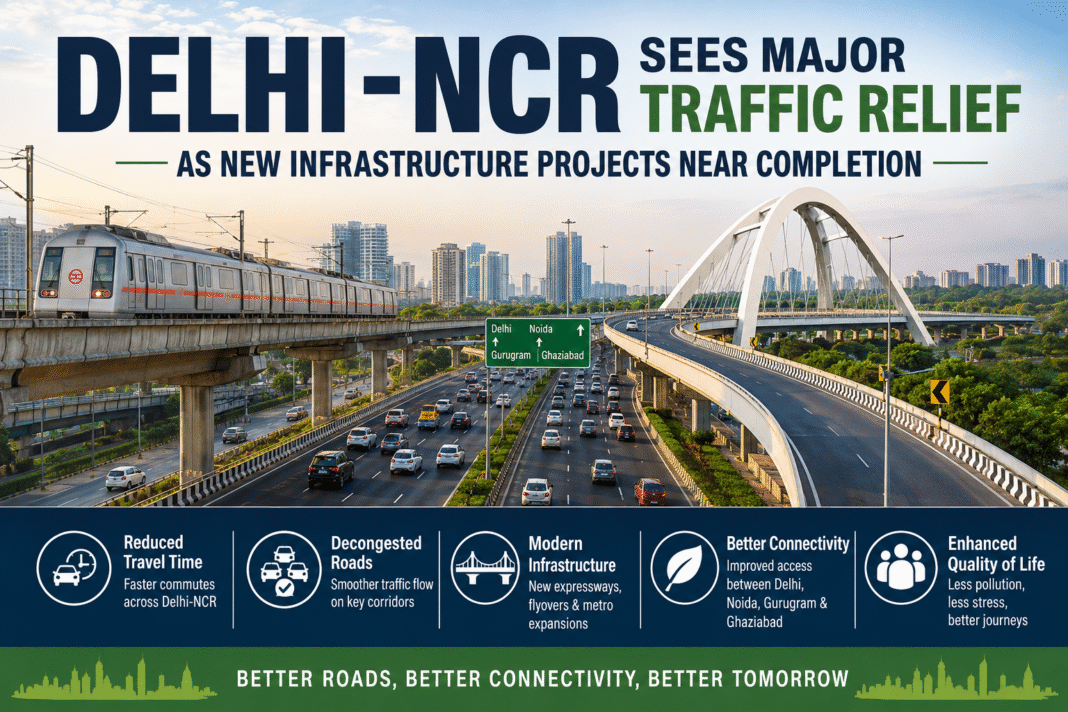
For millions of people living in Delhi-NCR, traffic has become an unavoidable part of everyday life. Whether it’s office-goers rushing to work, students heading to college, or families travelling across the region, spending long hours stuck in traffic has become a daily routine. However, there is finally some good news for commuters. Several major infrastructure projects across Delhi-NCR are now nearing completion, bringing fresh hope for faster travel, better connectivity, and a significant reduction in traffic congestion.
From new expressways and flyovers to elevated roads and metro extensions, these projects are set to improve transportation across Delhi, Noida, Greater Noida, Ghaziabad, Gurugram, and Faridabad. While traffic problems may not disappear overnight, these developments are expected to make commuting far more convenient than it has been in recent years.
A New Chapter for Delhi-NCR’s Road Network
Over the last decade, Delhi-NCR has witnessed rapid urban growth. New residential societies, business hubs, shopping centres, and industrial areas have emerged across the region. Along with this growth came a sharp rise in the number of vehicles on the road, putting tremendous pressure on existing infrastructure.
Recognizing these challenges, central and state governments have invested heavily in expanding the road network. Today, many of these ambitious projects are entering their final stages, promising a noticeable improvement in traffic conditions for millions of residents.
Major Projects Set to Transform Daily Commutes
Delhi-Mumbai Expressway
The Delhi-Mumbai Expressway is one of India’s most ambitious highway projects. Once fully operational, it will not only improve connectivity between Delhi and western India but also reduce the traffic burden on existing highways.
For people travelling to Gurugram, Faridabad, and nearby regions, the expressway is expected to offer a faster and more efficient travel experience.
Dwarka Expressway
Another game-changing project is the Dwarka Expressway. After years of construction, the expressway is finally approaching completion and is expected to ease congestion on the busy Delhi-Gurugram corridor.
Thousands of professionals who commute daily between Delhi and Gurugram could soon experience shorter travel times and less stressful journeys, especially during peak office hours.
Noida and Greater Noida Road Upgrades
Noida and Greater Noida have become important residential and commercial destinations in recent years. To support this rapid growth, several road-widening projects, flyovers, and improved intersections have been developed.
These upgrades are expected to reduce bottlenecks, improve connectivity with the Yamuna Expressway, and make travel within the twin cities much smoother.
Ghaziabad Infrastructure Improvements
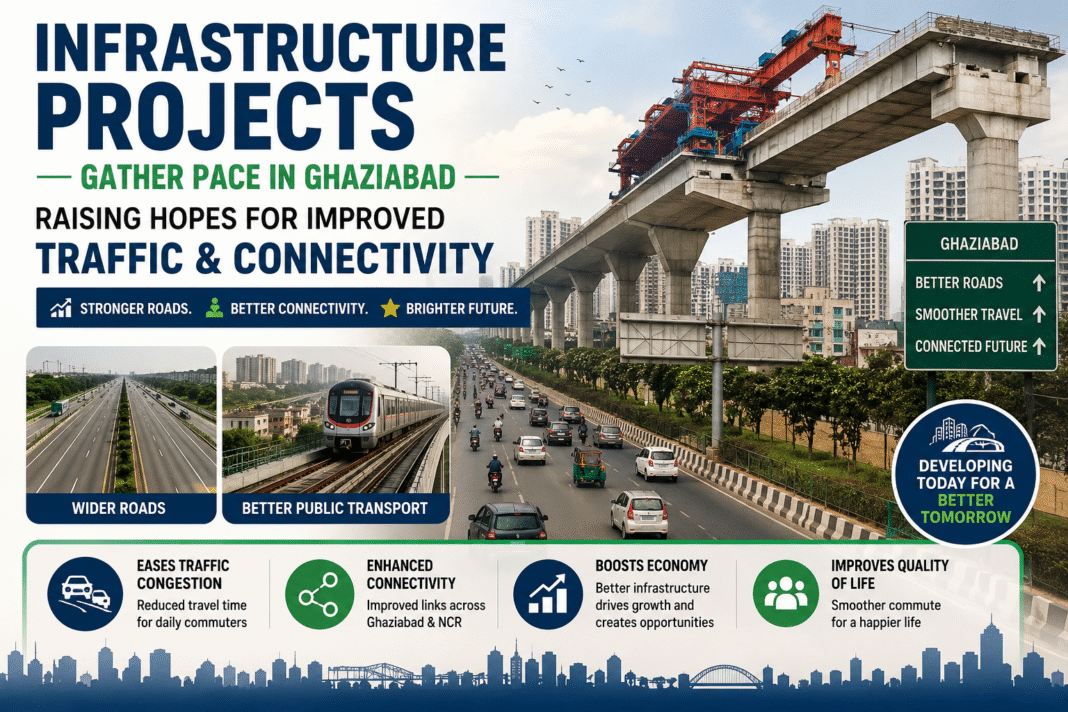
Ghaziabad has also seen significant investment in road infrastructure. Elevated roads, new flyovers, and better-designed intersections are expected to improve connectivity with Delhi and Noida while reducing congestion on key routes.
For residents who travel daily between Ghaziabad and Delhi, these improvements could mean spending less time in traffic and more time with family.
Metro Expansion Adds to the Relief
Road infrastructure alone cannot solve every traffic problem. This is why the continued expansion of the Delhi Metro network remains equally important.
New metro extensions connecting Noida, Greater Noida, Ghaziabad, and Gurugram are providing commuters with faster and more reliable public transport options. As metro connectivity improves, many people may choose public transport over private vehicles, helping to ease pressure on the roads.
The combination of better roads and expanded metro services is expected to create a more balanced and efficient transport system across Delhi-NCR.
Faster Travel Means Better Quality of Life
Perhaps the biggest advantage of these infrastructure projects is the time they can save.
Many commuters currently spend one to two hours travelling relatively short distances during peak traffic. With new expressways, signal-free corridors, and wider roads becoming operational, travel times are expected to reduce considerably.
Less time spent in traffic means lower stress levels, improved work-life balance, and more productive hours each day.
Better Connectivity Will Strengthen the Economy
Improved infrastructure benefits much more than daily commuters. Businesses also stand to gain significantly from faster transportation.
Efficient road networks help reduce logistics costs, improve the movement of goods, and encourage new investments. Commercial hubs in Noida, Gurugram, Ghaziabad, and Faridabad are likely to become even more attractive for companies looking to expand their operations.
Improved connectivity also supports the growth of local businesses, retail markets, and industrial zones, contributing to the region’s overall economic development.
Cleaner Roads, Cleaner Air
Traffic congestion doesn’t just waste time—it also increases pollution. Vehicles stuck in slow-moving traffic consume more fuel and release higher levels of emissions.
As traffic begins to move more smoothly on newly developed roads, fuel consumption and vehicle emissions are expected to decrease. While better public transport remains essential for long-term sustainability, improved infrastructure can certainly contribute to cleaner air and a healthier urban environment.
Positive Impact on Real Estate
Infrastructure development often boosts the value of nearby residential and commercial properties. Areas located close to new expressways, metro stations, and flyovers generally become more attractive for both homebuyers and investors.
Developers are already seeing growing demand in well-connected parts of Delhi-NCR. Better roads not only improve accessibility but also make schools, hospitals, offices, and shopping destinations easier to reach, enhancing the overall quality of life.
Challenges Still Need Attention
Although these projects represent a major step forward, they are not a complete solution to Delhi-NCR’s traffic challenges.
The region continues to experience rapid population growth and rising vehicle ownership. To ensure long-term improvements, authorities will also need to focus on better traffic management, efficient public transportation, regular road maintenance, and smarter urban planning.
Continued investment in sustainable mobility will remain essential as the region grows.
Looking Ahead
The completion of these infrastructure projects marks an important milestone for Delhi-NCR. Together, new expressways, elevated roads, flyovers, and metro expansions are expected to reshape the way people travel across the region.
While some congestion may still exist during peak hours, commuters can look forward to smoother journeys, reduced travel times, and stronger connectivity between major cities.
For millions of residents, these developments represent more than just new roads—they promise greater convenience, improved productivity, and a better quality of life.
Conclusion
Delhi-NCR is steadily moving towards a future with smarter and more efficient transportation. As several major infrastructure projects near completion, residents can expect noticeable improvements in daily commuting, regional connectivity, and overall urban development.