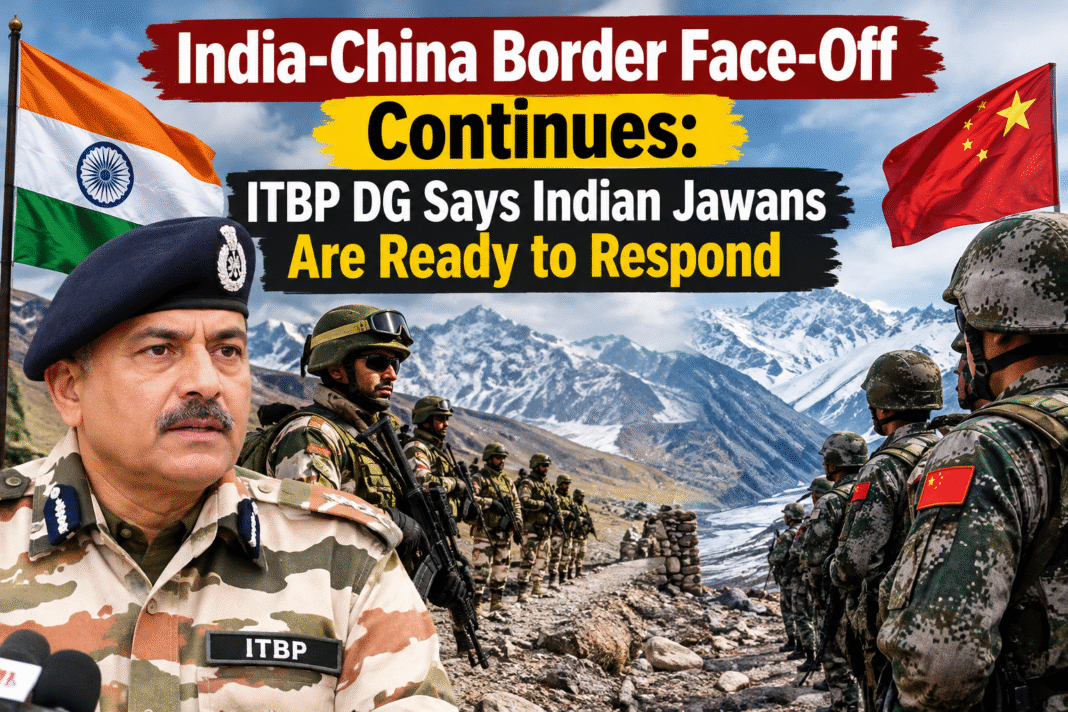
The India-China border remains an important concern for India’s national security. Security personnel deployed along the Himalayan frontier work in difficult conditions to protect the country’s borders. The Indo-Tibetan Border Police (ITBP) plays a major role in this responsibility, with its personnel trained to handle challenging terrain, extreme weather, and sensitive border situations.
The India-China Border Face-Off continues to attract attention because of the long-standing boundary dispute between the two countries. India’s focus remains on keeping its security forces prepared, improving border infrastructure, and ensuring that personnel have the training and equipment needed to perform their duties.
The reported remarks by the ITBP Director General about the readiness of Indian jawans have once again drawn attention to the importance of border security. However, the exact statement and the status of any specific ongoing face-off should be confirmed through an official source.
India-China Border Face-Off: Why Is It Important?
India and China share a long border that passes through some of the most difficult geographical regions in the world. Parts of this boundary remain disputed, and both countries have different perceptions of certain areas along the Line of Actual Control (LAC).
Because of these differences, tensions can sometimes arise when patrols from the two sides encounter each other. Such situations require careful handling to prevent local disagreements from turning into larger confrontations.
India-China Border News remains an important topic because developments along the frontier can affect diplomatic relations, military planning, and regional stability.
The Himalayan region also creates practical challenges for security forces. Many locations are situated at high altitudes, where temperatures can drop sharply and oxygen levels are low. Heavy snowfall, steep mountain routes, and unpredictable weather can make even routine patrols difficult.
For this reason, border security depends on proper planning, regular training, reliable communication, and coordination between security agencies.
ITBP DG Statement: Indian Jawans Remain Prepared
The Indo-Tibetan Border Police was established in 1962 following the India-China conflict. Since then, the force has developed specialised skills for working in high-altitude areas and guarding India’s Himalayan frontier.
The ITBP DG Statement, as described in the reported headline, highlights the importance of keeping Indian personnel prepared for challenging situations. The force’s training focuses on physical fitness, discipline, endurance, and the ability to perform duties in difficult conditions.
Jawans posted in remote border areas often work far away from major towns and essential facilities. They must be prepared to deal with freezing temperatures, difficult travel conditions, and sudden changes in the weather.
Their preparation includes regular exercises, equipment checks, communication drills, and coordination with other security agencies. These activities help personnel carry out their responsibilities effectively.
Being prepared does not necessarily mean that a confrontation is taking place at every location. Instead, it means maintaining the ability to respond appropriately if a situation develops.
The exact remarks attributed to the ITBP DG should be checked against the original interview or official statement before being quoted as a direct statement.
What Does the ITBP Do Along the China Border?
The ITBP is one of India’s specialised forces responsible for guarding the Himalayan frontier. Its work involves much more than patrolling remote mountain areas.
Personnel monitor sensitive locations, carry out assigned patrols, support border security operations, and help respond to emergencies. The force also has experience in mountain rescue and disaster-response activities.
Working in these areas requires considerable physical strength and mental resilience. Personnel may need to travel through snow-covered routes, steep slopes, and isolated valleys to reach their assigned locations.
Providing the right equipment and supplies is equally important. Warm clothing, suitable footwear, communication equipment, medical facilities, and access to essential supplies help personnel work safely in harsh conditions.
The ITBP’s experience in high-altitude operations makes it an important part of India’s border security arrangements.
Why Is Guarding the Himalayan Border So Difficult?
Protecting India’s Himalayan frontier comes with challenges that are very different from those faced by security forces in cities or plains.
Extreme Cold and Heavy Snowfall
Temperatures in some high-altitude locations can fall well below freezing. Snowfall and strong winds can affect visibility, slow movement, and make patrolling more difficult.
Difficult Mountain Routes
Many border areas have narrow roads, steep slopes, and remote valleys. Transporting supplies and reaching certain locations can take considerable time, especially during bad weather.
Health Challenges at High Altitudes
Low oxygen levels can make physical activity more demanding. Personnel need time to adjust to the altitude, along with proper medical support and physical preparation.
The Need for Constant Vigilance
Border security requires regular monitoring and effective communication. Security personnel must be able to share information quickly and coordinate their activities when circumstances change.
These challenges explain why specialised training and reliable logistical support are essential for personnel serving along the Himalayan frontier.
India Focuses on Better Border Infrastructure
Having trained personnel is only one part of border security. Roads, communication systems, transport facilities, and reliable supply networks are also necessary.
India has been working to improve infrastructure in strategically important border regions. Better road connectivity can make it easier to transport supplies and reach remote areas. Improved communication facilities can also help security personnel coordinate their work.
These improvements become particularly important during winter, when snowfall and severe weather can interrupt transport and restrict access to certain locations.
Modern equipment and regular training also help security forces remain prepared for changing conditions. Together, these measures support India’s broader efforts to maintain security along the frontier.
India-China LAC Tensions: Why Diplomacy Also Matters
The relationship between India and China involves several issues, including the border dispute, trade, regional security, and diplomatic cooperation.
Although tensions have occurred along the LAC, communication between the two countries remains important for managing disagreements. Diplomatic discussions and military-level talks can help address concerns, clarify positions, and reduce the risk of escalation.
India-China LAC Tensions are therefore not just a military issue. They also involve diplomacy, strategic planning, and efforts to maintain stability in the region.
India needs to protect its territorial interests while continuing to use established communication channels to manage border-related challenges.
It is also important to understand that a general statement about troop readiness does not automatically confirm a new clash or a worsening situation. Any report about a specific face-off should be supported by reliable information from the relevant authorities.
What Does This Mean for India’s Security?
The readiness of security personnel is an essential part of protecting India’s borders. Regular training, proper equipment, improved infrastructure, and coordination between agencies help ensure that personnel can perform their duties in difficult circumstances.
For people following India-China Border News, the main point is that border security requires continuous preparation, even when there is no immediate confrontation.
The ITBP’s role also shows the importance of specialised forces that understand the demands of mountain operations. Their work requires patience, discipline, and the ability to remain focused in challenging conditions.
At the same time, accurate reporting is important. Details about troop movements, face-offs, or official statements should be published only after they have been verified.
Conclusion
The India-China border remains a sensitive area, and maintaining security along the Himalayan frontier continues to be an important responsibility for India. The ITBP plays a key role in this effort, with its personnel trained to work in extreme weather and difficult mountain conditions.
The reported ITBP DG Statement has brought attention to the readiness of Indian jawans and the importance of maintaining strong border preparedness. Meanwhile, India-China LAC Tensions continue to make security, diplomacy, and border infrastructure important subjects.