Monsoon 2026 Arrives with Relief and New Concerns
After months of intense summer heat, the arrival of Monsoon 2026 has brought much-needed relief to millions of people across India. Cooler temperatures and fresh rainfall have helped ease water shortages in many regions. However, the monsoon has also arrived with a new set of challenges as several states face the threat of flooding, waterlogging, and weather-related disruptions.
The India Meteorological Department (IMD) has issued multiple Heavy Rainfall Alerts across various parts of the country, warning residents about the possibility of extremely heavy showers, thunderstorms, and strong winds. As rainfall activity intensifies, state governments and disaster management agencies are working to ensure public safety.
While the monsoon remains vital for agriculture and water resources, the increasing Flood Risk During Monsoon season is becoming a growing concern for both urban and rural communities.
Heavy Rainfall Alerts Issued Across Multiple States
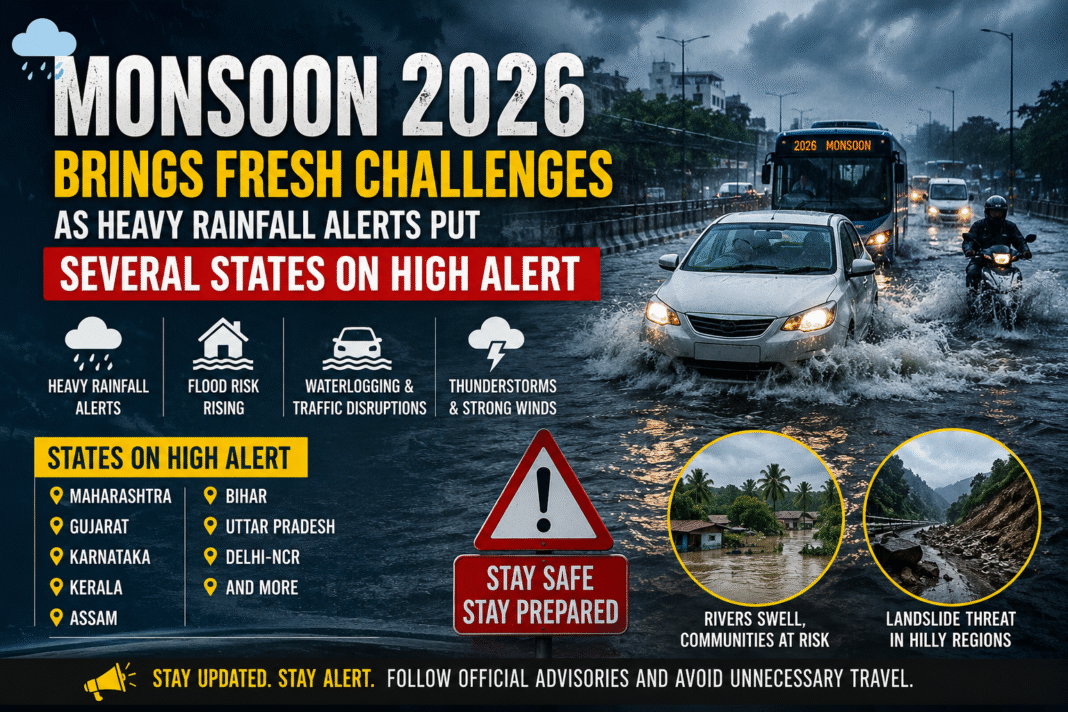
The latest Heavy Rainfall Alerts have been issued for several states, including Maharashtra, Gujarat, Kerala, Karnataka, Assam, Bihar, Uttar Pradesh, and parts of Delhi-NCR. Weather experts predict that some regions may receive above-normal rainfall over the coming weeks.
Authorities have advised residents living in low-lying areas and near rivers to remain cautious. Emergency response teams have been placed on standby, while local administrations are closely monitoring weather conditions.
The current phase of Monsoon 2026 India has already demonstrated how quickly weather conditions can change. In some areas, heavy downpours have led to waterlogged roads, traffic disruptions, and temporary power outages.
Cities Struggle with Waterlogging and Traffic Congestion
Urban areas are among the worst affected during periods of intense rainfall. Major cities such as Mumbai, Bengaluru, Chennai, Hyderabad, and Delhi have reported significant waterlogging following heavy showers.
For commuters, even a short period of rainfall can result in hours of traffic congestion. Flooded roads, slow-moving vehicles, and disrupted public transport services have become common scenes during Monsoon 2026.
Experts believe that rapid urbanization and inadequate drainage systems are making cities more vulnerable to extreme weather events. As Heavy Rainfall Alerts continue, authorities face increasing pressure to improve urban infrastructure and drainage management.
The challenges experienced in major cities highlight the need for long-term planning to reduce the impact of future monsoon seasons.
Rising Flood Risk During Monsoon in Rural Areas
While cities deal with waterlogged streets, rural communities face a different challenge. The Flood Risk During Monsoon is particularly high in regions located near rivers and floodplains.
States such as Assam and Bihar frequently experience flooding during the monsoon season, and this year is no exception. Continuous rainfall has caused river water levels to rise, increasing concerns about possible overflow in vulnerable districts.
For families living in flood-prone areas, the threat goes beyond property damage. Flooding can disrupt livelihoods, affect access to healthcare, damage roads, and force residents to evacuate their homes.
Local authorities have begun preparing relief camps and emergency shelters to ensure that communities can respond quickly if conditions worsen.
Agriculture Depends on a Balanced Monsoon
India’s agricultural sector relies heavily on seasonal rainfall, making Monsoon 2026 India a critical period for farmers.
The good news is that early rainfall has improved soil moisture levels in many agricultural regions. Crops such as rice, maize, sugarcane, and pulses depend on timely monsoon rains for healthy growth.
However, excessive rainfall can create problems. Waterlogged fields may damage crops, delay sowing activities, and increase the spread of pests and plant diseases. Farmers in areas under Heavy Rainfall Alerts are being advised to monitor weather forecasts and take precautionary measures whenever possible.
The overall success of the agricultural season will depend on how evenly rainfall is distributed in the coming months.
Landslide Threats Increase in Hilly Regions
Heavy rainfall is not only causing flooding but also increasing the risk of landslides in mountainous regions. States such as Himachal Pradesh, Uttarakhand, and parts of Northeast India remain particularly vulnerable.
Continuous rain weakens soil stability and can trigger sudden landslides that block roads, damage homes, and disrupt transportation routes. Authorities have issued warnings urging travelers to exercise caution while moving through hilly areas.
The risk of landslides is expected to remain high as Monsoon 2026 progresses, especially in regions already experiencing prolonged rainfall.
Technology Plays a Bigger Role in Monsoon Management
One encouraging development during Monsoon 2026 India is the growing use of technology in disaster preparedness and weather forecasting.
Government agencies are increasingly using real-time weather monitoring systems, flood prediction models, mobile alert services, and digital communication platforms to keep citizens informed.
These technological tools help authorities respond more effectively to Heavy Rainfall Alerts and provide timely information to people living in vulnerable areas. Quick access to accurate forecasts allows communities to prepare for potential emergencies before they occur.
Public Awareness Remains Essential
While government preparedness is important, public awareness also plays a crucial role in reducing the impact of monsoon-related disasters.
Residents are encouraged to stay informed through official weather updates, avoid flooded roads, and follow local advisories. Keeping emergency supplies, medicines, drinking water, and power banks readily available can be extremely helpful during severe weather events.
Simple precautions can significantly reduce risks associated with the growing Flood Risk During Monsoon season.
Looking Ahead
Weather experts believe that Monsoon 2026 may continue to bring above-normal rainfall to several regions of India. While this could improve water storage levels and benefit agriculture, it may also increase the likelihood of floods, landslides, and infrastructure-related challenges.
The coming weeks will test the preparedness of government agencies, local administrations, and communities across the country. Effective coordination and timely action will be essential to minimizing disruptions and protecting lives.
Conclusion
Monsoon 2026 has once again highlighted the importance of balancing opportunity with preparedness. While the rains bring relief from summer heat and support India’s agricultural economy, the widespread Heavy Rainfall Alerts serve as a reminder of the challenges that accompany the season.