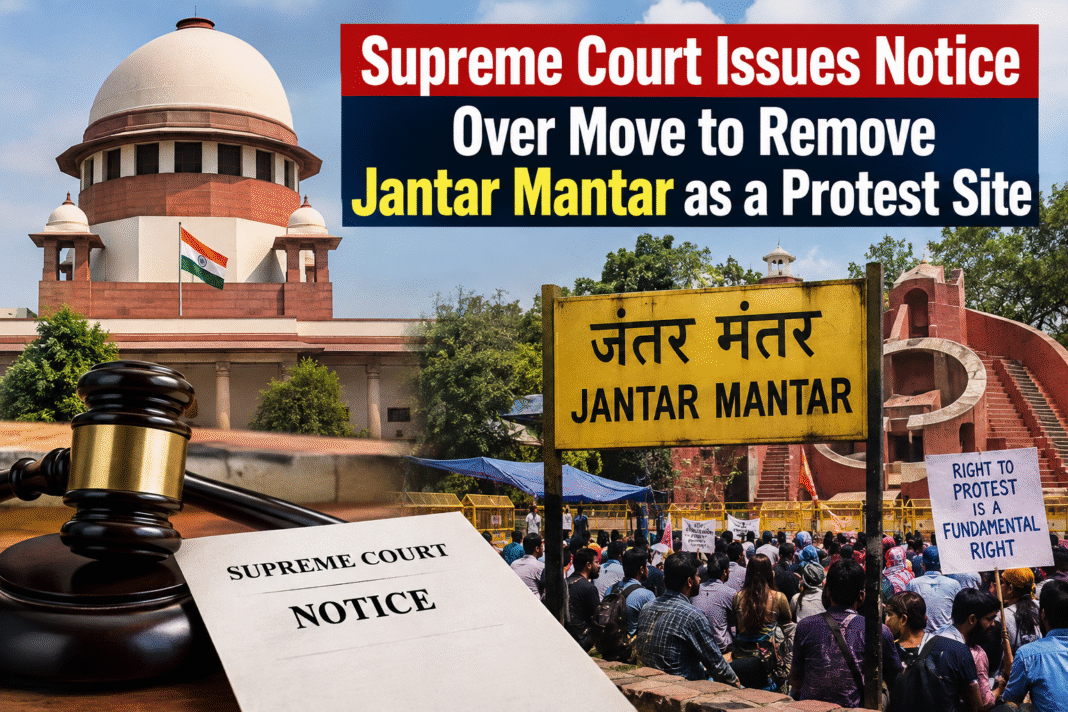
The Supreme Court of India has issued a notice over a move to remove Jantar Mantar in New Delhi as a designated protest site. The development has brought the issue of peaceful protests back into the spotlight and raised questions about how the authorities can balance public safety with people’s democratic rights.
Jantar Mantar has been an important place for protests and public demonstrations for many years. People from different parts of India have gathered here to raise their concerns, demand action from the government, and draw attention to issues affecting their lives.
The latest Supreme Court Jantar Mantar News has attracted attention because the outcome of the case could have implications for how protests are organised in Delhi. It has also renewed the discussion around the Right to Peaceful Protest in India.
Supreme Court Issues Notice Over Jantar Mantar Protest Site
The Supreme Court’s notice is an important development in the matter concerning the future of the Jantar Mantar Protest Site. By issuing a notice, the court seeks a response from the concerned parties before proceeding further with the case.
However, a notice does not mean that the court has already made a final decision. The matter will depend on the legal arguments, responses from the parties involved, and any further directions issued by the court.
The main issue is whether Jantar Mantar should continue to be available as a designated location for public demonstrations or whether changes should be made to the existing arrangements.
The latest Jantar Mantar Protest Site News has drawn attention from people who believe that peaceful demonstrations are an important way for citizens to express their views and bring public issues to the attention of the authorities.
The final outcome could help clarify the legal questions surrounding the proposed change and the arrangements for holding protests in the national capital.
Why Is Jantar Mantar Important for Protests?
Jantar Mantar is one of the most recognised places for public demonstrations in Delhi. Over the years, it has become associated with social movements, political campaigns, and protests over issues affecting ordinary citizens.
For many people, visiting Jantar Mantar is a way to make their voices heard. Activists, social organisations, political groups, and citizens have used the location to gather peacefully and call for action on matters they consider important.
A designated protest site can also make it easier for the administration to manage demonstrations. Instead of gatherings taking place at different locations across the city, authorities can plan security arrangements and manage crowds in a specific area.
This is one reason why the future of the Jantar Mantar Protest Site matters to both protesters and the administration.
If the existing arrangement changes, people may need to look for alternative locations. Whether those locations are easy to access and suitable for public demonstrations will also be an important consideration.
Right to Peaceful Protest in India
The debate over Jantar Mantar is closely connected to the Right to Peaceful Protest in India.
The Indian Constitution protects freedom of speech and expression under Article 19(1)(a). Article 19(1)(b) also gives citizens the right to assemble peacefully and without arms.
These freedoms allow people to share their opinions, raise concerns, and participate in public discussions. Peaceful protests can help bring attention to issues that citizens feel require government action.
However, the right to protest is not unlimited. Article 19(3) allows reasonable restrictions on peaceful assembly, subject to constitutional requirements.
Authorities may introduce lawful restrictions when there are concerns about public order and other relevant interests. The challenge is to ensure that these measures are appropriate while respecting citizens’ fundamental rights.
The Jantar Mantar issue highlights an important question: how can authorities maintain public order without unnecessarily limiting people’s ability to express their concerns?
The answer depends on the specific circumstances, the applicable law, and the details considered during the legal proceedings.
Traffic and Security Concerns in Delhi
Delhi is a busy city, and large public gatherings can sometimes create challenges for traffic management, security, and everyday movement.
When demonstrations take place, commuters may face delays, nearby roads can become crowded, and authorities may need to make additional security arrangements. Emergency services and local residents may also be affected if a gathering causes significant disruption.
These concerns are important, and the administration has a responsibility to maintain public safety.
At the same time, removing a designated protest location and regulating demonstrations are not necessarily the same thing. Authorities may need to consider whether existing arrangements can address public concerns or whether suitable alternatives are available.
Any proposed change should be understood in the context of the reasons behind it, the relevant legal rules, and its possible effect on peaceful demonstrations.
The Supreme Court’s consideration of the matter could bring greater attention to these questions.
What Could Happen If Jantar Mantar Is Removed as a Protest Site?
If the proposal moves forward, protest organisers may have to consider other locations for their demonstrations. The actual impact will depend on the final decision and any alternative arrangements made by the authorities.
For protesters, the location of a demonstration can make a real difference. A site that is easy to reach by public transport may allow more people to participate, while a location far from central areas could make attendance more difficult.
Alternative protest sites would also need to offer enough space for gatherings and allow the authorities to manage security and public movement.
At the same time, designated locations can help prevent unexpected gatherings from disrupting other parts of the city.
This is why the Jantar Mantar Protest Site News is about more than just a change of location. It also raises questions about how citizens can continue to participate in democratic activities while the administration manages the needs of a busy capital.
The final impact will depend on what the court decides and how the authorities respond.
Why Does the Supreme Court’s Role Matter?
The Supreme Court plays an important role in protecting constitutional principles and examining disputes involving fundamental rights.
When a matter involves restrictions on public demonstrations, the court may need to consider the legal basis for those restrictions and how they relate to citizens’ constitutional freedoms.
The latest Supreme Court Jantar Mantar News has therefore become significant for people following civil liberties, public demonstrations, and administrative decisions in Delhi.
It is important to understand that issuing a notice is only a step in the legal process. It does not automatically mean that the proposed removal has been approved or rejected.
The court will consider the matter through the applicable legal process. Further proceedings and official orders will provide a clearer picture of what happens next.
Until then, it would be premature to assume that Jantar Mantar will definitely lose its status as a protest site.
What Happens Next in the Case?
The next steps will depend on the responses submitted by the concerned parties and any further proceedings before the Supreme Court.
The case may bring more clarity to the legal questions surrounding the proposed change, the management of public demonstrations, and the availability of designated protest locations.
The development is also relevant to wider Delhi Protest News, as it highlights the challenges involved in managing demonstrations in a city that serves as India’s political and administrative centre.
Citizens, activists, and protest organisers will be watching for official updates. Any final decision could influence discussions about how public demonstrations are organised and what arrangements should be available to people who want to raise their concerns peacefully.
For accurate information, readers should follow official court orders and reports from reliable news organisations.
Conclusion
The Supreme Court’s notice over the move to remove Jantar Mantar as a protest site has brought an important issue into focus. The case highlights the need to balance peaceful public demonstrations with traffic management, security, and the smooth functioning of the city.
Jantar Mantar has been a familiar place for people who want to raise their voices on public issues. Any change to its status could affect how protests are organised in Delhi and where citizens can gather to express their concerns.