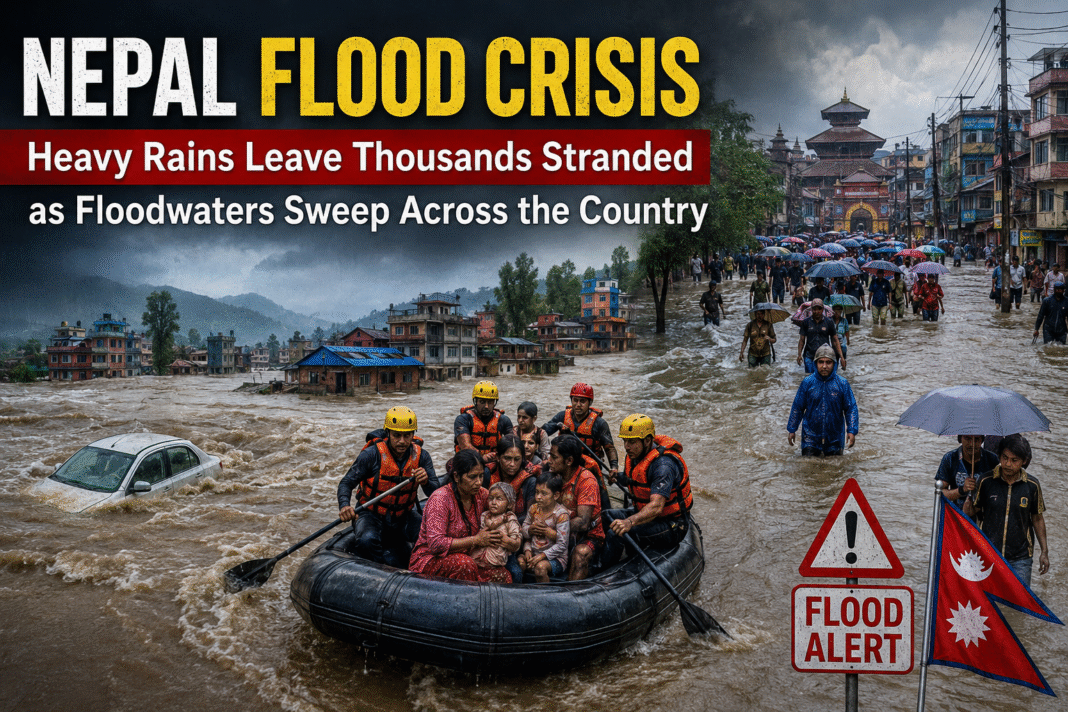
Nepal is going through a difficult and dangerous situation as heavy rains in Nepal continue to trigger flooding and landslides across several areas. Rivers have swollen, roads have been damaged and communities have been cut off as floodwaters move through low-lying and mountainous regions.
The worsening Nepal flood crisis has left thousands of people struggling to reach safety. For many families, what started as heavy rainfall quickly turned into a fight to protect their homes and loved ones.
Rescue teams are now working around the clock to reach people trapped in affected areas, while authorities continue to assess the damage.
Nepal Flood Crisis: What Happened?
The latest Nepal floods have affected communities living close to rivers and in vulnerable mountainous areas.
Nepal’s geography makes it particularly vulnerable to sudden flooding. When rainfall becomes intense, rivers can rise quickly, while water rushing down steep mountain slopes can cause flash floods and landslides.
In some places, residents have had very little time to react.
Roads have been blocked by mud and debris, bridges have been damaged and vehicles have been swept away in areas where floodwaters became too strong to cross.
The situation has also made it difficult for emergency teams to reach remote villages.
Thousands Stranded as Floodwaters Rise
One of the biggest concerns in the ongoing Nepal flood crisis is the number of people who have been left stranded.
Some families have been forced to leave their homes, while others remain trapped because roads and bridges are no longer usable.
For people living in remote mountain communities, even basic necessities can become difficult to access during a disaster.
Food, drinking water, medicines and temporary shelter are among the immediate needs.
Emergency teams are trying to reach the worst-hit areas, but damaged roads and difficult terrain are slowing down rescue efforts.
Nepal Flash Floods Leave Little Time to Escape
The danger from Nepal flash floods is that they can happen extremely quickly.
Unlike flooding that develops gradually, flash floods can send large amounts of water rushing through river channels and valleys within a short period.
The water can carry mud, rocks, trees and other debris, making it extremely dangerous for anyone caught in its path.
For residents living near rivers, the sudden rise in water levels can leave very little time to collect belongings or evacuate.
This is why early warnings and quick evacuation can make such a major difference during extreme weather events.
Heavy Rains in Nepal Raise Fresh Concerns
The continuing heavy rains in Nepal are making the situation harder for both residents and rescue workers.
When rain continues for hours or days, the ground becomes saturated and mountain slopes can become unstable. This increases the possibility of fresh landslides.
At the same time, more rain can push river levels higher and create new flooding downstream.
Authorities are therefore keeping a close watch on rivers, weather conditions and areas already affected by landslides.
Residents in vulnerable locations are being urged to stay alert and follow instructions from local authorities.
Nepal Landslides Add to the Crisis
Flooding is not the only problem facing Nepal.
Nepal landslides have also caused serious disruption by blocking roads and damaging infrastructure.
For people living in mountainous areas, roads are often the main connection to nearby towns and hospitals. When a landslide blocks a road, an entire community can suddenly find itself isolated.
Landslides can also make rescue operations dangerous because the ground may remain unstable even after the rain stops.
Emergency workers therefore have to move carefully while trying to reach affected families.
Rescue Teams Race Against Time
Rescue operations are continuing in several affected areas.
Security forces and emergency teams are helping evacuate residents, search for missing people and deliver essential supplies.
Where roads are inaccessible, helicopters and other emergency resources may be needed to reach isolated communities.
But rescuers are facing difficult conditions.
Heavy rain, damaged roads, debris and the threat of additional landslides can make even a short journey extremely risky.
For families waiting for help, every hour matters.
The Human Cost of the Nepal Floods
The real impact of the Nepal floods cannot be measured only by the number of damaged buildings or roads.
For families affected by the disaster, the biggest concern is often the safety of their loved ones.
Some people have lost their homes and belongings, while others are waiting for news about relatives who have become unreachable.
Farmers and small business owners may also face major financial losses as crops, livestock, shops and equipment are damaged.
For displaced families, life after the flood will not immediately return to normal. They will need shelter, food, healthcare and financial support as they begin rebuilding their lives.
Why Does Nepal Face Frequent Flood and Landslide Risks?
Nepal’s natural landscape is one of the main reasons floods and landslides can become so destructive.
The country has steep mountains, narrow valleys and fast-flowing rivers. During periods of heavy rains in Nepal, large amounts of water can move quickly from higher elevations into river systems.
When soil becomes saturated, mountain slopes can also become unstable.
This combination of rainfall, steep terrain and powerful rivers means that communities in vulnerable areas can face multiple risks at the same time.
The current Nepal flood crisis is once again highlighting the importance of early-warning systems, stronger infrastructure and effective evacuation plans.
Could More Flooding Happen?
The danger may not be over even if rainfall decreases.
Wet and unstable ground can continue to trigger Nepal landslides, while additional rainfall can cause rivers to rise again.
Authorities therefore need to remain cautious even after the immediate floodwaters begin to recede.
Residents are advised to avoid flooded roads, damaged bridges and areas where landslides have recently occurred.
India and the International Community Watching Closely
The latest Nepal flood news is also being closely followed in neighbouring countries, particularly India.
Nepal’s rivers flow toward downstream areas, meaning major flooding in Nepal can have implications beyond its borders.
India and other countries can play an important role in providing emergency assistance and monitoring river conditions.
International humanitarian organisations may also support Nepal as rescue efforts develop and the country begins assessing the longer-term damage.
What Happens Next?
For now, the priority is simple: save lives and reach people who are still stranded.
Rescue teams will continue searching affected areas while authorities work to understand the full extent of the damage.
Once the immediate danger passes, Nepal will have another difficult task ahead — rebuilding damaged roads, bridges, homes and public infrastructure.
The disaster may also lead to renewed discussions about improving flood-warning systems, strengthening infrastructure and preparing communities for extreme weather.
For thousands of families, however, the focus right now is much more personal: finding loved ones, getting to safety and beginning the difficult process of putting their lives back together.
Frequently Asked Questions
What is causing the Nepal flood crisis?
The Nepal flood crisis is linked to severe weather conditions, including heavy rainfall, rising river levels, flash flooding and landslides.
What are Nepal flash floods?
Nepal flash floods are sudden floods that can develop very quickly, particularly around mountain streams, rivers and valleys. They can carry water, mud, rocks and debris at dangerous speeds.
Why are heavy rains in Nepal dangerous?
Heavy rains in Nepal can cause rivers to rise rapidly and can make mountain slopes unstable, increasing the risk of both floods and landslides.
Why are Nepal landslides dangerous?
Nepal landslides can destroy roads, damage homes and isolate entire communities. They can also make rescue operations more difficult and dangerous.
Where can people follow Nepal flood news?
The latest Nepal flood news should be followed through official government updates, local authorities and trusted news organisations, especially during an evolving emergency.
Are rescue teams helping affected communities?
Yes. Rescue and emergency teams are working to evacuate residents, search for missing people and provide essential supplies to communities affected by the Nepal floods.
Conclusion
The Nepal flood crisis has left thousands of people facing uncertainty as flooding, Nepal flash floods, heavy rains in Nepal and Nepal landslides continue to threaten vulnerable communities.