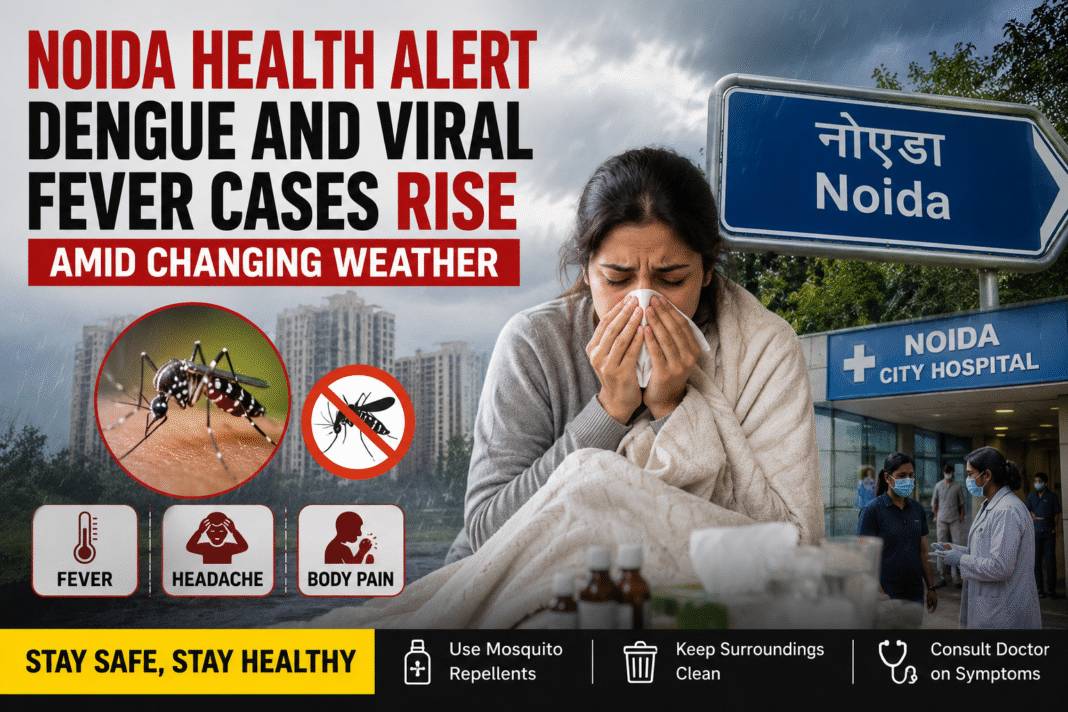
Noida Health Alert: The changing weather in Noida has become a growing concern for residents as cases of dengue and viral fever continue to be reported during the monsoon season. Frequent rainfall, high humidity and sudden temperature changes are creating conditions in which mosquitoes can breed easily, while seasonal infections are also affecting many people across Delhi-NCR.
For many families, fever, weakness, body pain, cough and cold may initially seem like ordinary seasonal problems. However, health experts and local authorities are urging residents not to ignore symptoms, particularly when fever is persistent or accompanied by other warning signs.
Why Dengue Risk Is Increasing in Noida
Monsoon weather brings much-needed relief from the heat, but it also creates favourable conditions for mosquito breeding. Rainwater can collect in flowerpots, coolers, rooftops, open containers, construction areas and other places around homes and residential societies.
According to recent reports, 41 dengue cases had been reported in Gautam Buddha Nagar since January, with authorities identifying eight dengue hotspots for increased monitoring.
Health officials are also keeping a close watch on residential areas where stagnant water could become a breeding ground for mosquitoes. Reports said that notices were issued to several high-rise societies over concerns related to stagnant water and mosquito breeding.
The message for residents is simple: don’t wait for mosquitoes to become a problem before taking action. Removing stagnant water regularly can play an important role in controlling mosquito populations.
Viral Fever Is Another Concern
Dengue isn’t the only health issue residents need to be careful about. Changing weather conditions are also being linked with an increase in viral and respiratory infections across Delhi-NCR.
People visiting doctors are reporting symptoms such as fever, cough, sore throat, body ache, weakness and fatigue. Since many viral infections can produce symptoms similar to dengue during the early stages, it can sometimes be difficult for people to understand what is causing their illness.
This is why doctors generally advise people not to depend solely on self-diagnosis. If a fever continues, becomes severe or is accompanied by unusual symptoms, consulting a healthcare professional is a safer approach.
What Are the Common Symptoms of Dengue?
Dengue can start suddenly and may initially look like a normal viral fever. Some common symptoms include:
- High fever
- Severe headache
- Pain behind the eyes
- Muscle and joint pain
- Extreme tiredness
- Nausea or vomiting
- Loss of appetite
- Skin rash
Not everyone with dengue experiences the same symptoms. In some cases, the illness can become serious, especially when warning signs appear.
Severe abdominal pain, repeated vomiting, unusual bleeding, breathing difficulties, extreme weakness or drowsiness should not be ignored. Anyone experiencing concerning symptoms should seek medical attention promptly.
How Can Noida Residents Stay Safe?
The good news is that several simple steps can reduce the risk of mosquito-borne diseases.
The first and most important step is to remove stagnant water. Residents should regularly check their homes and surroundings for places where rainwater may have collected.
Pay special attention to:
- Flowerpots and plant trays
- Water coolers
- Open buckets and containers
- Rooftops and balconies
- Discarded tyres
- Construction sites
- Open drains
- Water storage tanks
If a container must be used to store water, it should be properly covered. Coolers and other water-holding equipment should also be cleaned regularly.
Using mosquito repellents, wearing clothes that cover the arms and legs and using mosquito nets or window screens can provide additional protection.
Housing Societies Have an Important Role
In Noida, a large number of people live in apartment complexes and high-rise societies. This makes community-level prevention particularly important.
A single apartment may not be the source of a problem, but stagnant water in a basement, garden, parking area or construction zone can create mosquito-breeding opportunities for an entire residential community.
Residents’ welfare associations and maintenance teams should therefore regularly inspect common areas and ensure that water does not remain stagnant after rainfall.
Fogging and anti-larval measures can help, but they work best when combined with proper sanitation and the removal of breeding sites.
Parents Should Pay Attention to Children
Children can also be affected by seasonal infections, especially when they spend long hours in schools and other crowded environments.
Parents should keep an eye on symptoms such as fever, weakness, cough, cold, poor appetite or unusual tiredness. If a child develops a fever, allowing them adequate rest and seeking medical advice when necessary can help prevent complications.
Children who are unwell should also avoid going to school until they have recovered, particularly if they have symptoms that could spread to others.
Don’t Assume Every Fever Is Just Viral
One of the biggest mistakes people can make during the monsoon is assuming that every fever is simply a seasonal viral infection.
Dengue, influenza and other infections can have similar early symptoms. Recent reports have also highlighted an increase in H1N1 cases in Gautam Buddha Nagar, adding to concerns about seasonal illnesses in the region.
This does not mean that every person with fever has dengue or H1N1. Instead, it highlights why persistent or unusual symptoms should be taken seriously.
People should avoid taking medicines on their own without appropriate medical advice, particularly when the cause of the fever is unclear.
What Authorities and Residents Can Do Together
Controlling dengue requires cooperation between health authorities, local bodies, housing societies and residents.
Authorities can conduct surveillance, identify hotspots, carry out mosquito-control measures and spread awareness. At the same time, residents need to make sure their homes and surroundings do not provide mosquitoes with places to breed.
Simple actions such as emptying water-filled containers, keeping drains clean and reporting mosquito-breeding sites can make a meaningful difference.
Noida Health Alert: Stay Alert, Not Alarmed
The rise in dengue and viral fever cases is a reason for caution, but residents do not need to panic. The most important thing is to stay informed and take preventive measures early.
As the weather continues to change, people in Noida and across Gautam Buddha Nagar should keep their surroundings clean, avoid stagnant water and pay attention to persistent fever or unusual symptoms.