

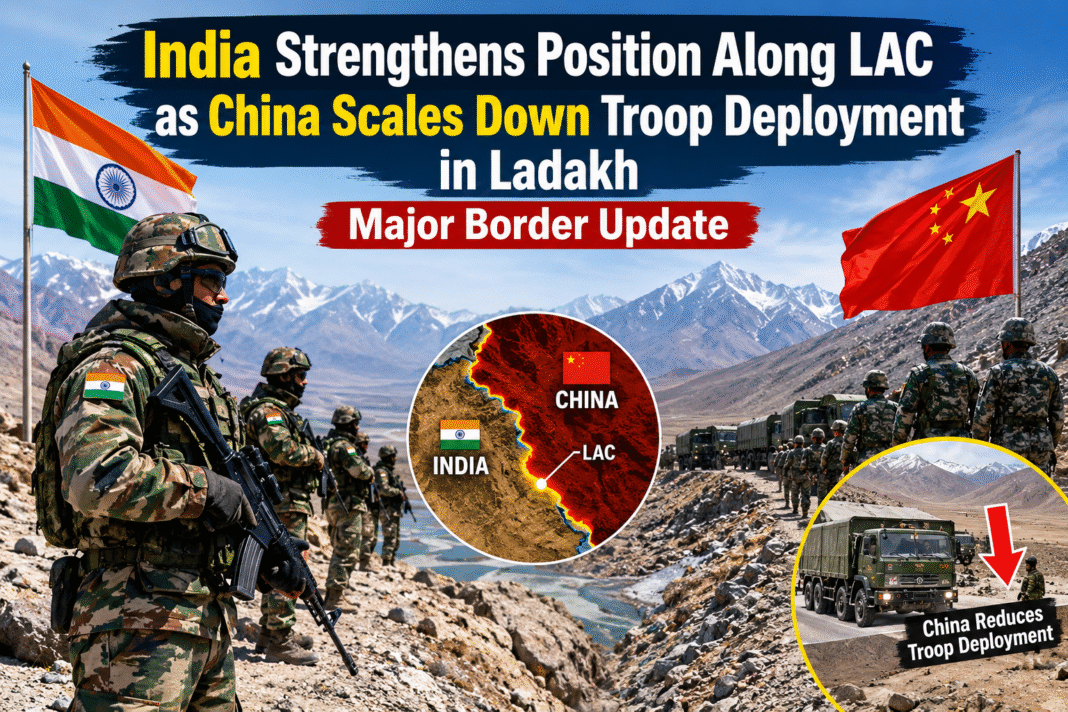
The situation along the India-China border appears to be entering a somewhat calmer phase. China has reportedly reduced its military deployment along parts of the Line of Actual Control (LAC), including the sensitive Ladakh sector. The development comes after years of heightened military activity following the India-China border tensions that began in 2020.
For India, this is an important development. Over the past few years, New Delhi has focused heavily on strengthening roads, bridges, surveillance systems and military infrastructure along the Himalayan border. As a result, India today is better prepared to deal with any sudden change in the situation.
The latest India-China LAC update is therefore being watched closely. While a reduction in Chinese troops could signal easing tensions, it does not mean the long-standing border dispute has been resolved.
China Scales Down Troop Deployment
One of the biggest talking points in the latest development is the change in China Troop Deployment along the northern frontier.
China increased its military presence significantly after the 2020 border crisis. Thousands of troops and large amounts of military equipment were moved closer to forward areas. This created a prolonged period of tension between the two countries.
Now, the reported reduction in deployment suggests that China is gradually moving away from the unusually high level of military presence seen during the peak of the standoff.
For India, this is certainly a welcome sign. Fewer troops in forward positions can reduce the possibility of face-offs and unexpected incidents.
However, experts continue to point out that troop numbers are only one part of the larger security picture. Military infrastructure, roads, surveillance and logistics remain equally important.
India Has Strengthened Its Position in Ladakh
India has not remained dependent on troop numbers alone. Since the 2020 crisis, the country has significantly improved its ability to operate in the difficult terrain of Ladakh.
New and upgraded roads, bridges and other infrastructure have made it easier to move troops and supplies to remote border areas. Better communication and surveillance systems have also improved India’s ability to keep track of activity near the LAC.
This is why the latest Ladakh Border Update is about more than China reducing troops.
India’s stronger infrastructure means the country can maintain its preparedness even if the immediate military situation becomes calmer.
The approach is straightforward: diplomacy can continue, but border security cannot be taken for granted.
Why the India-China LAC Remains Important
The India-China LAC has been a major source of tension between the two countries for decades. The situation became particularly serious after the Galwan Valley clash in 2020.
Following the clash, both countries increased their military presence along the frontier. Several rounds of talks were subsequently held between military commanders and diplomats to reduce tensions.
Disengagement in some areas helped lower the immediate risk of confrontation. But the larger boundary issue remains unresolved.
That is why every significant change in troop deployment continues to attract attention in New Delhi and Beijing.
For India, maintaining peace along the border is important, but so is ensuring that its forces are ready for any unexpected development.
Border Talks Are Still Important
Military developments are only one side of the story. Diplomatic communication between India and China remains equally important.
Both countries have continued discussions aimed at maintaining peace and preventing local incidents from turning into larger confrontations.
Regular communication between military commanders can be especially useful in remote areas, where even a small misunderstanding can create tension.
The latest Ladakh Border Update comes at a time when both sides appear interested in managing tensions rather than allowing them to escalate.
For India, the message has remained consistent: dialogue is welcome, but peace along the border must be backed by mutual respect and stability.
Ladakh Remains a Sensitive Region
Ladakh is not an easy place for military operations. Its high altitude, freezing temperatures and difficult terrain make even routine movement challenging.
Because of these conditions, infrastructure plays a huge role in border security.
A road or bridge that saves several hours of travel can make a significant difference when troops or supplies need to reach forward locations quickly.
India’s continued investment in border infrastructure has therefore become an important part of its strategy.
Even if China Troop Deployment continues to decline, India is expected to maintain strong surveillance and adequate forces in strategically important areas.
Does the Reduction Mean the Border Dispute Is Over?
No.
The reduction in Chinese military deployment is encouraging, but it would be too early to describe it as a permanent end to tensions.
The India-China boundary dispute remains unresolved, and both countries continue to have different positions on several parts of the border.
There is also a possibility that military deployments could change again depending on developments on the ground.
For this reason, India is likely to follow a balanced strategy — support diplomatic efforts while keeping its military preparedness strong.
In simple terms, the situation may be calmer, but India is not expected to lower its guard.
What This Means for India
The latest development gives India some breathing space after years of intense military tension.
A sustained reduction in China Troop Deployment could help reduce pressure along the frontier and create a better environment for diplomatic engagement.
It could also help both countries gradually rebuild confidence.
But India is unlikely to view the development as a reason to become complacent. The lessons of the 2020 crisis remain fresh, and maintaining strong border infrastructure and military readiness will continue to be a priority.
Could India-China Relations Improve Further?
A more stable border could eventually help improve relations between India and China beyond the military sphere.
Both countries have important economic and diplomatic interests. However, rebuilding trust after years of tension will take time.
For India, stability along the LAC is likely to remain a key condition for deeper improvement in bilateral relations.
If troop reductions continue, military communication remains open and no fresh incidents occur, the two countries could gradually move toward a more stable relationship.
Conclusion
The latest India-China LAC development offers a cautiously positive signal. China’s reported reduction in military deployment along the Ladakh frontier suggests that the intense military buildup of recent years may be easing.

