India Begins a New Chapter in Green Rail Transport
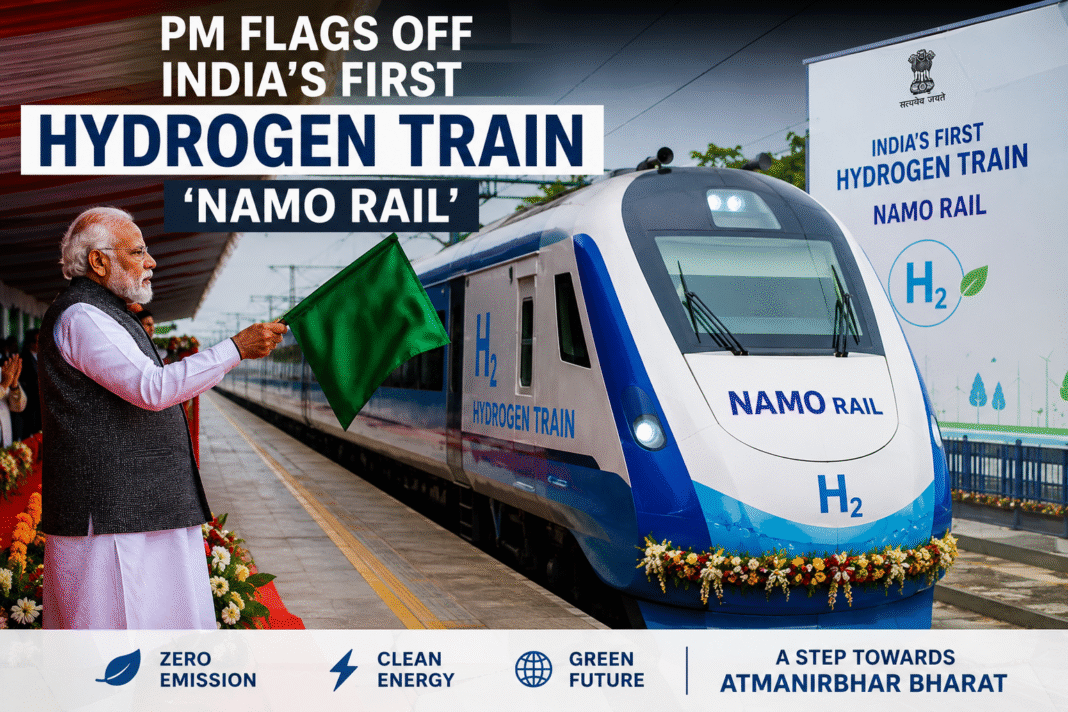
India took a significant step toward a cleaner and more sustainable future as Prime Minister Narendra Modi, speaking live from Jind, Haryana, flagged off India’s first hydrogen-powered train, ‘Namo Rail’. The launch is more than just the introduction of a new train—it represents India’s growing commitment to green energy, modern infrastructure, and innovative transportation.
Hydrogen-powered trains are considered one of the cleanest alternatives to traditional diesel locomotives because they produce only water vapor and heat as by-products. With this initiative, India joins a small group of countries exploring hydrogen technology to make public transport more environmentally friendly.
PM Modi Flags Off India’s First Hydrogen Train ‘Namo Rail’
Addressing a large gathering in Jind, Prime Minister Narendra Modi described the launch as an important milestone in India’s journey toward sustainable development. He said the hydrogen train reflects the country’s vision of combining technological innovation with environmental responsibility.
The event attracted railway officials, engineers, local residents, and public representatives, all witnessing what could become a turning point for Indian Railways. The Prime Minister also highlighted the government’s ongoing efforts to modernize the railway network through electrification, better infrastructure, and advanced technology.
The introduction of India’s First Hydrogen Train ‘Namo Rail’ shows that Indian Railways is preparing for the future while supporting the country’s clean energy goals.
What Makes the Hydrogen Train Different?
Unlike diesel trains that burn fossil fuels, hydrogen-powered trains generate electricity through fuel cells. This process produces almost no harmful emissions, making the trains far more environmentally friendly.
Some of the key benefits include:
- Zero carbon emissions during operation
- Cleaner and quieter journeys
- Reduced dependence on diesel fuel
- Lower environmental impact
- Improved energy efficiency
- Modern passenger facilities and enhanced travel comfort
As climate change and pollution continue to be global concerns, technologies like hydrogen fuel cells are becoming increasingly important for the future of transportation.
A Major Boost for India’s Green Energy Mission
The launch of PM Modi LIVE From Jind | PM Flags Off India’s First Hydrogen Train ‘Namo Rail’ fits perfectly with India’s broader vision of promoting renewable energy and reducing carbon emissions.
Over the past few years, the government has invested heavily in solar power, wind energy, electric mobility, and now hydrogen-based technologies. The National Green Hydrogen Mission is expected to play a crucial role in helping India reduce its dependence on imported fossil fuels while building a stronger clean-energy economy.
Hydrogen is considered one of the fuels of the future because it has the potential to power not only trains but also heavy industries, shipping, and long-distance transportation.
Why This Project Matters
The launch of India’s first hydrogen train is not just about introducing a new technology—it represents a long-term investment in sustainable development.
If the project proves successful, it could help Indian Railways:
- Reduce greenhouse gas emissions
- Improve air quality across railway routes
- Lower fuel costs in the long run
- Encourage innovation in clean technology
- Strengthen India’s position as a global leader in green transportation
It also supports the government’s vision of creating infrastructure that is both modern and environmentally responsible.
Economic Opportunities Beyond Railways
Hydrogen technology has the potential to create opportunities far beyond the railway sector.
As India develops hydrogen production, storage, and transportation infrastructure, new industries and employment opportunities are likely to emerge. Domestic manufacturers could also benefit from increased demand for hydrogen fuel systems, railway equipment, and advanced engineering solutions.
The project aligns with initiatives like Make in India, encouraging local manufacturing while reducing dependence on imported technology.
Positive Response from Citizens
The launch received widespread attention across the country. Many people appreciated the government’s focus on clean energy and viewed the hydrogen train as a symbol of India’s technological progress.
Social media was filled with reactions celebrating the historic moment, while experts praised the move as an important step toward reducing pollution and embracing sustainable mobility.
For the people of Jind, the event became a proud occasion, placing the city on the national map as the starting point of an ambitious railway initiative.
Challenges That Still Need Attention
While hydrogen technology offers enormous promise, experts point out that several challenges remain before it can be adopted on a larger scale.
These include:
- High production costs of green hydrogen
- Developing hydrogen refueling stations
- Building safe storage and transportation systems
- Training technical staff for maintenance
- Expanding infrastructure across the railway network
However, with continued investment and technological progress, these challenges are expected to become more manageable over time.
The Road Ahead for Indian Railways
The launch of India’s First Hydrogen Train ‘Namo Rail’ marks only the beginning of a much larger journey.
Indian Railways will closely monitor the train’s performance, operational efficiency, and passenger experience before expanding hydrogen-powered services to other routes. If the pilot project delivers positive results, more hydrogen trains could become part of India’s railway network in the coming years.
This initiative also complements India’s long-term climate commitments and demonstrates that economic growth and environmental protection can move forward together.
Conclusion
The flagging off of India’s First Hydrogen Train ‘Namo Rail’ by Prime Minister Narendra Modi from Jind is a landmark achievement for Indian Railways and the country’s clean energy ambitions. It reflects a future where innovation, sustainability, and modern infrastructure work hand in hand.