Over the past few years, PM Modi Global Diplomacy has played a major role in shaping India’s image on the world stage. From attending international summits to strengthening ties with neighboring countries, Prime Minister Narendra Modi has focused on building long-term partnerships that support India’s economic growth, security, and global influence.
One of the biggest priorities of Narendra Modi Foreign Policy has been expanding India’s presence in Southeast Asia. With the help of the Act East Policy, India has deepened its relationships with ASEAN nations through trade, connectivity, defense cooperation, and cultural exchanges. These efforts are not only improving India ASEAN Relations but are also reinforcing India’s Strategic Position in one of the world’s most important regions.
As the Indo-Pacific continues to shape global politics and trade, India’s growing engagement with Southeast Asia is becoming more significant than ever.
PM Modi’s Vision for a Stronger Partnership
Prime Minister Modi has repeatedly described Southeast Asia as a natural partner for India. The region is home to some of the fastest-growing economies and sits along major global shipping routes, making it strategically important for trade and security.
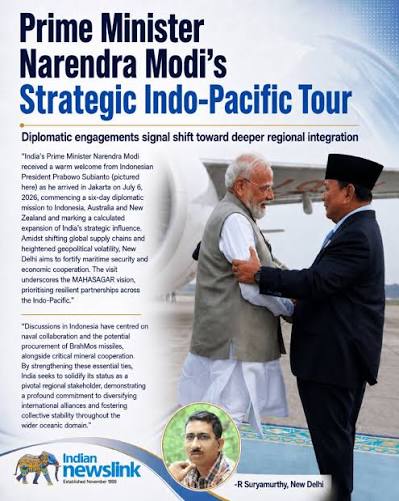
Through PM Modi Global Diplomacy, India has strengthened its ties with countries like Singapore, Vietnam, Indonesia, Malaysia, Thailand, and the Philippines. Regular high-level meetings, bilateral agreements, and participation in regional forums have helped create stronger political and economic relationships.
The government’s Act East Policy has been central to this approach. Unlike traditional diplomacy, it focuses on practical cooperation in areas such as infrastructure, digital technology, education, healthcare, tourism, and defense.
How the Act East Policy Is Changing India’s Role
The Act East Policy has transformed the way India engages with Southeast Asia. Instead of limiting cooperation to trade alone, India is now working closely with ASEAN countries across multiple sectors.
Major connectivity projects like the India-Myanmar-Thailand Trilateral Highway and the Kaladan Multi-Modal Transit Transport Project are expected to improve transportation, trade, and regional integration. These initiatives will make it easier for businesses to connect, boost tourism, and strengthen economic ties.
The policy also reflects India’s commitment to creating stronger regional partnerships based on mutual trust and shared development goals.
India ASEAN Relations Continue to Grow
A key success of Narendra Modi Foreign Policy has been the steady improvement in India ASEAN Relations. ASEAN has become one of India’s most important regional partners, with cooperation expanding across trade, investment, technology, education, and security.
Trade between India and ASEAN has grown consistently over the years, creating opportunities for businesses on both sides. Indian companies are investing more in Southeast Asia, while ASEAN nations continue to see India as a large and promising market.
Beyond business, both sides are working together on issues such as climate change, digital innovation, disaster management, and public health. These collaborations are making the partnership stronger and more meaningful.
India’s Strategic Position Is Becoming Stronger
The success of PM Modi Global Diplomacy is also evident in the way India’s Strategic Position has evolved across the Indo-Pacific region.
India is increasingly seen as a trusted and balanced partner that supports peace, stability, and regional cooperation. Unlike many global powers competing for influence, India has focused on building partnerships based on respect, dialogue, and shared interests.
This approach has earned India greater trust among Southeast Asian nations, many of which are looking for reliable partners to support their economic development and regional security.
The Importance of the Indo-Pacific Strategy
The Indo-Pacific Strategy has become one of the most important elements of India’s foreign policy.
Prime Minister Modi has consistently advocated for a free, open, inclusive, and rules-based Indo-Pacific where international law is respected and maritime routes remain secure. Since much of the world’s trade passes through these waters, maintaining peace and stability is essential for global economic growth.
India has expanded naval cooperation, maritime security partnerships, joint military exercises, and humanitarian assistance with several Southeast Asian countries. These efforts not only improve regional security but also strengthen India’s reputation as a responsible global partner.
Cultural Connections That Go Beyond Politics
One of the unique strengths of Narendra Modi Foreign Policy is its focus on cultural diplomacy. India and Southeast Asia share centuries-old historical and cultural connections through Buddhism, Hindu traditions, trade, language, and people-to-people exchanges.
India continues to promote these shared values through educational programs, tourism initiatives, cultural festivals, scholarships, and yoga events. Such efforts help build stronger relationships at the people-to-people level, making diplomatic ties more meaningful and long-lasting.
Looking Ahead
The future of PM Modi Global Diplomacy appears promising. As global attention shifts toward Asia, India’s role in Southeast Asia is expected to become even more important.
With stronger India ASEAN Relations, continued implementation of the Act East Policy, and an evolving Indo-Pacific Strategy, India is well-positioned to expand its influence while supporting regional peace and economic development.
The coming years are likely to bring greater cooperation in areas such as technology, renewable energy, digital infrastructure, healthcare, manufacturing, and sustainable development, creating new opportunities for both India and ASEAN countries.
Conclusion
PM Modi Global Diplomacy has helped strengthen India’s Strategic Position by building deeper partnerships across Southeast Asia. Through the Act East Policy, stronger India ASEAN Relations, and a forward-looking Indo-Pacific Strategy, Narendra Modi Foreign Policy has created new opportunities for economic growth, regional security, and diplomatic cooperation.